


Finding an affordable apartment can feel like a full-time job. Seriously. Between confusing program names, endless online listings, and those infamous waitlists, it's easy to get lost and even give up.
But it doesn't have to be that way.
This guide cuts through the noise. We'll give you a clear roadmap to move from endless searching to finding a comfortable, budget-friendly apartment that fits your life.
We'll break down the jargon – like the difference between public housing and housing vouchers – show you the best tools to locate properties, and lay out exactly what paperwork you'll need. No matter where you are in your search, the resources here will help you steer each step with confidence.
What “Low-Income” Really Means
When searching for apartments low income near me, it helps to understand the main types of subsidized housing programs and how they work. These programs make rent more manageable for individuals and families whose incomes fall below a certain threshold.
The term “low-income” is not just a catch-all—it’s a specific metric based on your area’s median income. Here’s what you should know:
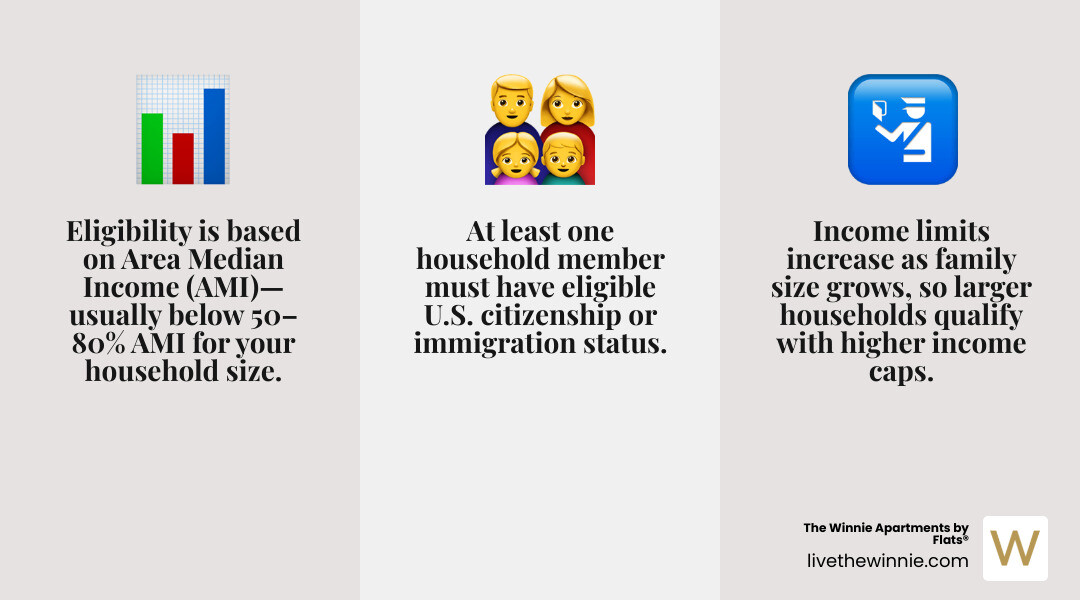
- Area Median Income (AMI): Subsidized housing programs use AMI to set eligibility. Typically, you must earn less than 50%–80% of the AMI for your household size. For example, in Chicago, a one-person household might need to earn less than $47,100 to qualify for certain programs.
- Family Size: The income limit rises with each additional household member.
- Citizenship Status: At least one household member must have eligible immigration or citizenship status.
How the Money Flows
The government doesn’t own most subsidized apartments. Instead:
- Federal Funding: Agencies like HUD (U.S. Department of Housing and Urban Development) provide funds to local Public Housing Agencies (PHAs).
- Landlord Contracts: These agencies pay apartment owners part of the rent, while residents pay a portion based on income (usually around 30%).
- Utility Allowances: Some programs include discounts or allowances to help cover utility bills.
Read scientific research on housing stability and health outcomes.
Comparing Public Housing and Section 8 Vouchers
| Program | Who Runs It? | Where Can You Live? | How Is Rent Set? | Who Pays the Landlord? |
|---|---|---|---|---|
| Public Housing | Local Housing Agency | Agency-managed buildings | 30% of your income | Agency pays landlord |
| Section 8 (Vouchers) | Local Housing Agency | Any private apt that accepts vouchers | 30% of your income | Agency pays landlord, rest from tenant |
How to Find apartments low income near me
Finding the right apartment requires a combination of online searching, direct contact, and patience. The good news is, there are more tools than ever to help.
Step-by-Step Map Search: apartments low income near me
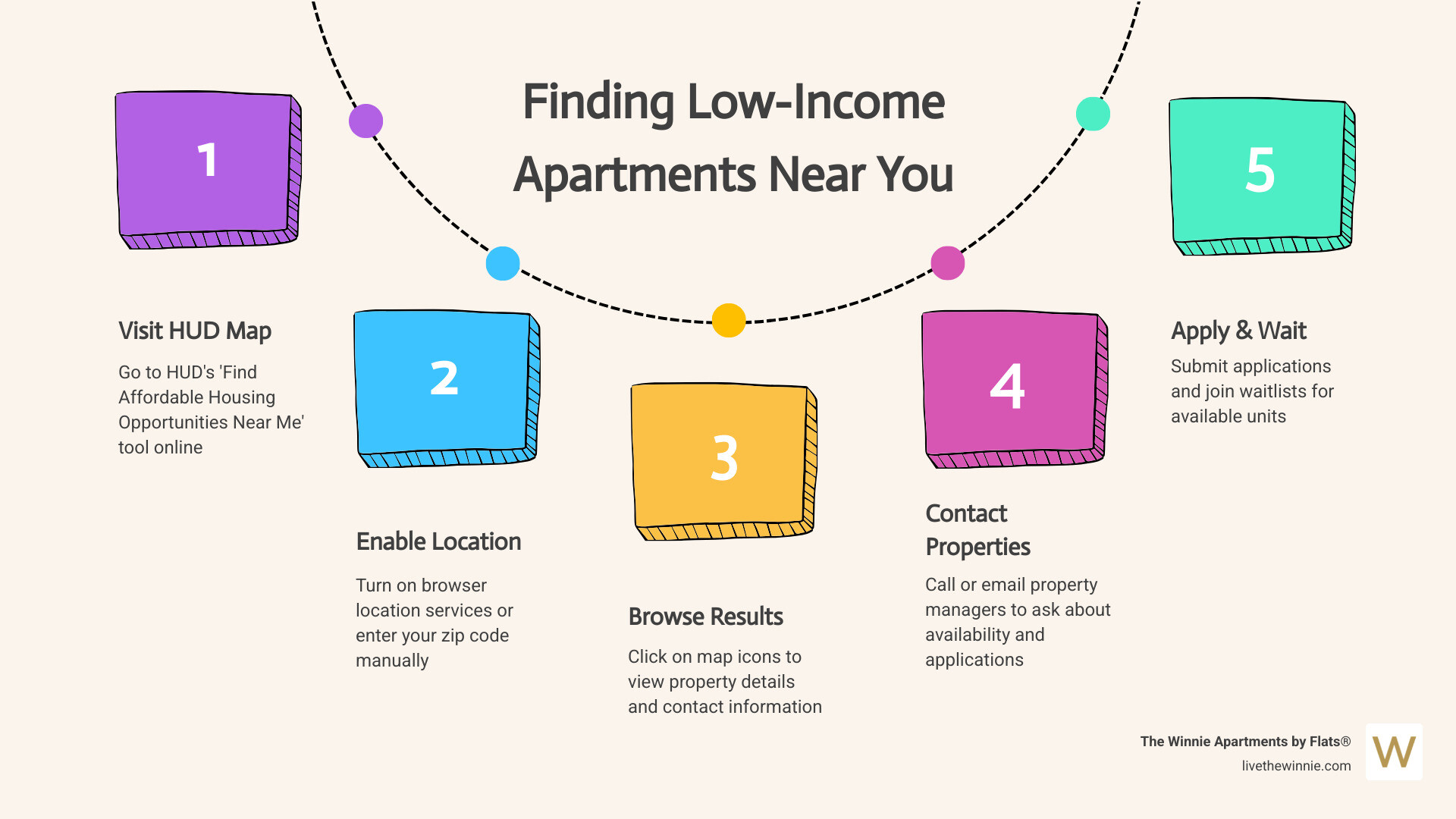
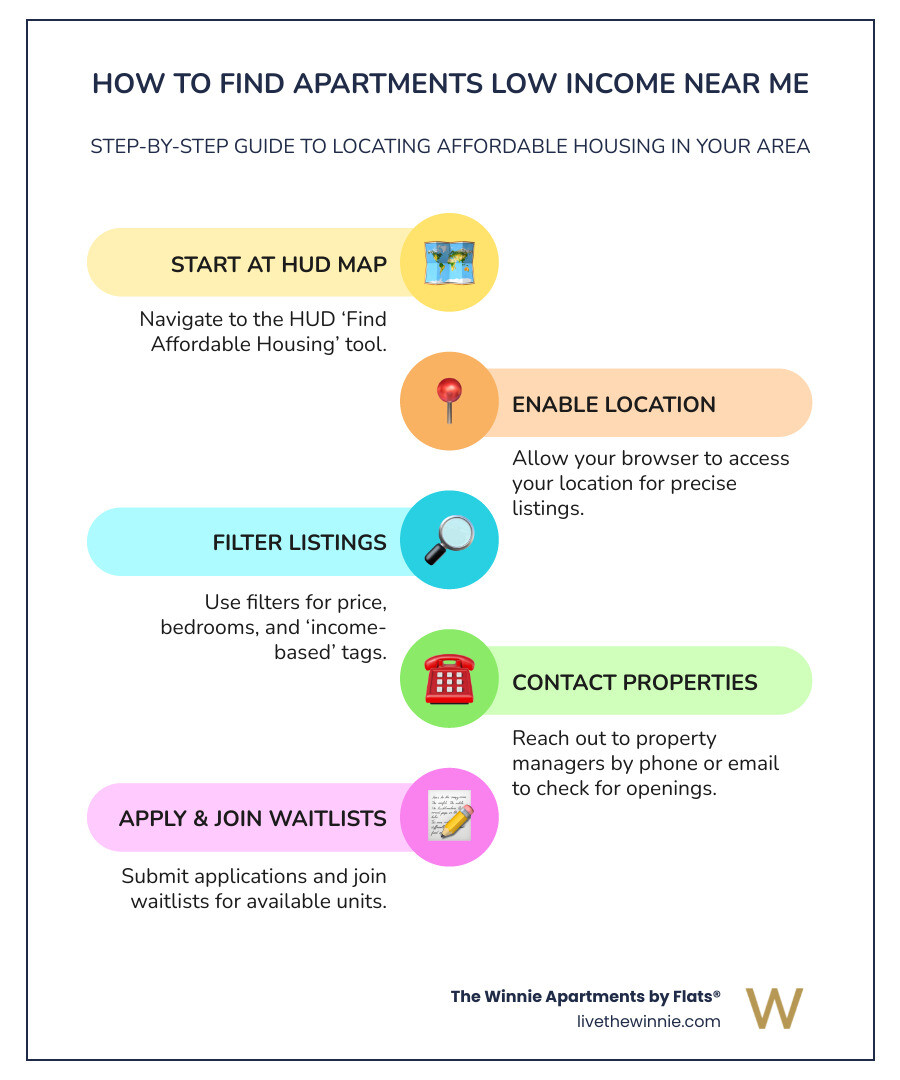
The quickest way to find apartments low income near me is to use HUD’s online map or other property directories. Here’s how:
- Go to HUD’s “Find Affordable Housing Opportunities Near Me” tool.
- Enable your browser’s location services for more accurate results.
- Enter your zip code or city if location services aren’t available.
- Click on the icons for properties to view details and contact info.
- Call or email property managers to ask about availability and application steps.

Local Helpers: Agencies to Locate apartments low income near me
- Public Housing Agencies (PHAs): Your first stop for program rules, applications, and waitlists. Find your local PHA here.
- 2-1-1 Hotline: Dial 2-1-1 to connect with local housing services, shelters, and emergency resources.
- Community Organizations: Many cities and counties have local nonprofits that can help you apply, gather documents, and understand your rights.
Find more about transit-friendly apartment options in Chicago.
Online Filters & Alerts
Most apartment search websites and directories let you:
- Filter by price, bedroom count, and amenities
- Check “income-based”, “voucher accepted”, or “subsidized” boxes
- Save searches to get email alerts when new listings open up
- Draw boundaries to target your search to your preferred neighborhood or commute radius
Applying, Eligibility & Tenant Rights
Once you find promising options, it’s application time! These programs require proof of your situation, and the process can be a marathon rather than a sprint.
What Goes in the Packet?
To apply for apartments low income near me, you’ll usually need:
- Government-issued ID for all adults
- Social Security numbers (or proof of eligible immigration status)
- Proof of income: recent pay stubs, benefit letters, or tax returns
- Current address and rental history
- List of all household members (including ages and relationships)
- Documentation of special circumstances: disability forms, veteran status, etc.

Some programs may also ask for:
- Bank statements or proof of assets
- Verification forms signed by your employer or benefit provider
Surviving the Waitlist for apartments low income near me
Patience is key. Most subsidized apartments have waitlists, and they can take anywhere from several months to several years to move. Here’s how to stay proactive:
- Apply to multiple properties and programs to increase your chances.
- Keep your contact info updated with every property and agency.
- Ask about interim resources: Some agencies offer emergency or short-term housing for those in crisis.
- Use FindHelp.org to locate shelters and social services in your area.
Know Your Rights & Avoid Scams
Subsidized tenants have important legal protections:
- Fair Housing Act: Protects against discrimination based on race, color, national origin, religion, sex, family status, or disability.
- Report discrimination or problems: Contact HUD or your local housing agency if you’re treated unfairly.
- Beware of scams: Never pay for a housing application except to the property itself. Watch for fake listings or anyone demanding cash upfront.
Search online for a HUD Approved Housing Counselor near you.
If you suspect fraud or abuse, call the HUD OIG Hotline.
Special Programs & Emergency Help
Not all low-income housing is one-size-fits-all. There are special resources for seniors, people living with disabilities, veterans, and those facing emergencies.
Custom Support Channels
- Senior-Designated Communities: Age-restricted properties with supportive services.
- Apartments with Accessibility Features: Many subsidized buildings offer units with modifications for mobility or sensory needs.
- Veterans: The HUD-VASH program partners with the VA to provide vouchers and case management. Call 1-877-4AID-VET for immediate help.
- Domestic Violence Survivors: Text 88788 for the national domestic violence hotline to access emergency shelter resources.

Utility & Energy Aid
Keeping the lights on is just as important as keeping a roof overhead. If you’re struggling with utility bills:
- Low Income Home Energy Assistance Program (LIHEAP): Offers grants to help pay heating and cooling bills.
- Department of Energy Tips: Simple steps to save on energy and reduce costs.
- Local Charities: Many counties have rent and utility assistance grants for those in need.
Frequently Asked Questions about apartments low income near me
What documents do I need to apply?
You’ll need:
- Government-issued ID for adults
- Social Security numbers or proof of eligible immigration status
- Recent pay stubs or benefits statements
- List of all household members
- Bank statements (sometimes)
- Rental history and current address
How is my portion of rent calculated?
Most programs set your rent at roughly 30% of your monthly adjusted gross income. The government pays the rest directly to the property owner.
Who can I call if I face eviction tomorrow?
- Dial 2-1-1 for immediate local help
- Contact your local Public Housing Agency for emergency housing options
- FindHelp.org lists shelters and assistance programs by zip code
- Veterans: Call 1-877-4AID-VET for crisis support
Conclusion
Searching for apartments low income near me can seem overwhelming, but there are real pathways to a stable, welcoming home. By understanding how programs like public housing and Section 8 work, using map tools and local agencies, and preparing your documents, you can steer the process with confidence.
The Winnie Apartments by Flats® in Uptown Chicago is proud to support budget-friendly urban living with modern studio and one-bedroom options. We believe comfort, convenience, and community should be within reach for everyone—no matter your income.
For more guidance on community living, local resources, and the next steps in your housing journey, explore our guide to community living in Chicago.
Remember: stay persistent, protect your rights, and reach out for help when you need it. Budget bliss starts with the right apartment—and the right information to get you there.