


Why the Mid-Century Studio Apartment Endures as a Design Icon
A mid century studio apartment is one of the most enduring small-space design concepts — and for good reason. The style blends function, warmth, and visual clarity in a way that works especially well when every square foot counts.
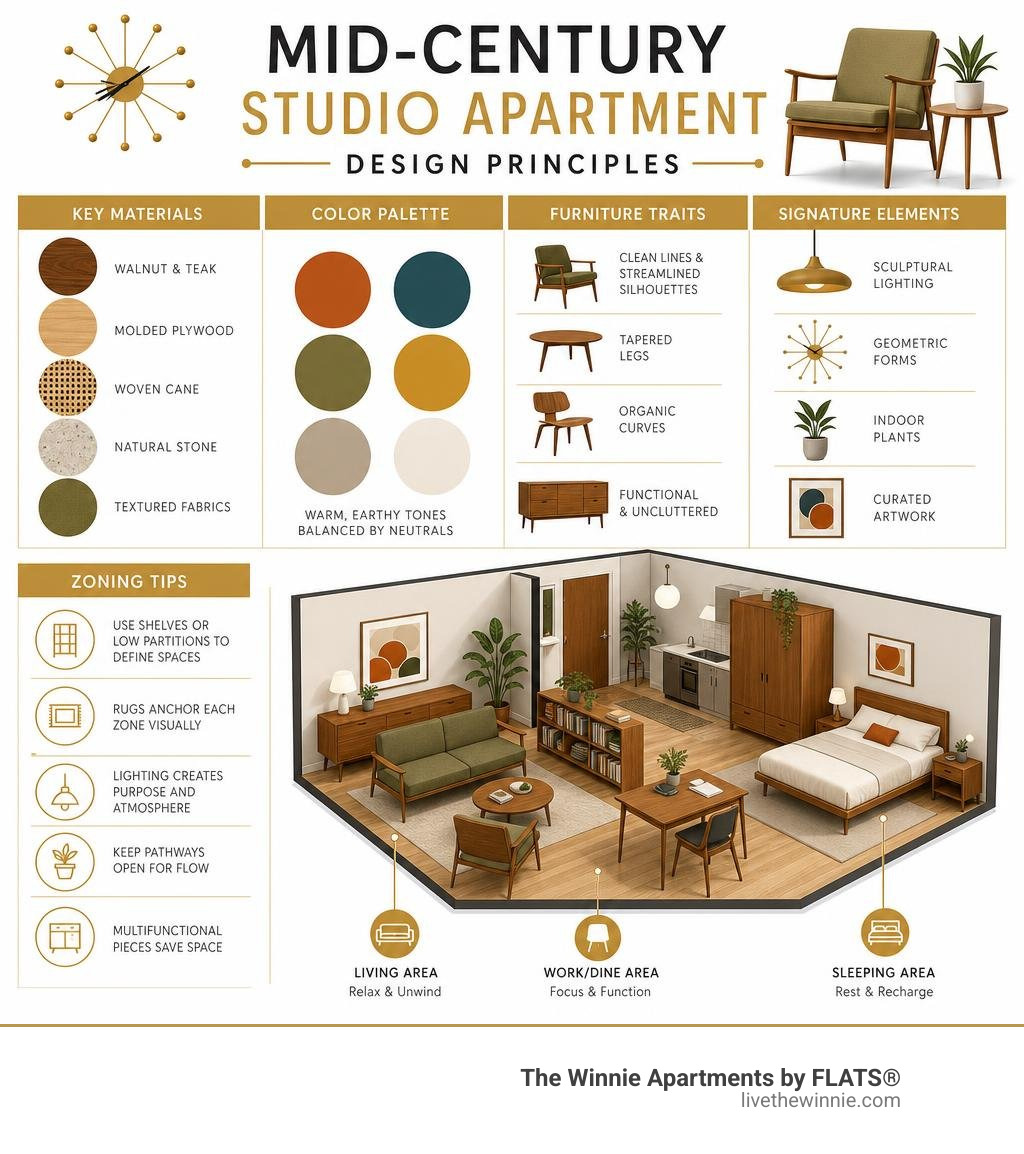
Here's what defines a mid-century modern studio apartment at a glance:
- Clean lines and organic curves — furniture with tapered legs, streamlined silhouettes, and no unnecessary ornamentation
- Natural materials — teak, walnut, and rosewood paired with molded plywood or woven cane
- Warm, curated color palettes — think burnt orange, deep teal, and muted olive anchored by neutral walls
- Functional zoning — distinct sleeping, living, and working areas within a single open room
- Sculptural lighting and intentional accessories — geometric lamps, indoor plants, and vintage art that earn their place
Mid-century modern design emerged after World War II as a response to ornate, over-decorated interiors. Designers like Charles and Ray Eames, Arne Jacobsen, and George Nelson prioritized honest materials, mass production, and function — ideas that translate perfectly into compact studio living today.
More than 70 years later, the aesthetic hasn't faded. It remains one of the most searched and pinned interior styles because it solves a real problem: how do you make a small space feel both beautiful and livable?
This guide walks you through exactly how to do that — from furniture selection and color palettes to zoning strategies and renter-friendly updates.
Defining the Mid-Century Studio Apartment Aesthetic

To successfully establish a mid century studio apartment aesthetic, we must first understand the core philosophy behind the movement. Mid-century design is not about cluttering a room with vintage kitsch; instead, it is about celebrating clean lines, geometric simplicity, and the inherent beauty of natural materials. In a single-room home, this philosophy translates to a sense of calm and visual relief.
When we look at successful compact homes, such as those featured in Tour a Clever and Uncluttered 300-Square-Foot NYC Studio | Apartment Therapy , we see that the most impactful spaces prioritize quality over quantity. Rather than filling every corner, they leave negative space to let the architectural lines of the furniture breathe. This approach prevents a small layout from feeling claustrophobic while allowing your standout vintage pieces to command the attention they deserve.
Selecting Furniture for Your Mid-Century Studio Apartment
When choosing furniture for a small footprint, look for pieces that exhibit classic mid-century traits: tapered legs, low-slung profiles, and streamlined silhouettes. Furniture elevated on peg legs allows light to pass underneath, making the floor area feel more expansive than it actually is.
Instead of a heavy, blocky sofa, opt for a sleek danish-style daybed or a loveseat with exposed wooden frames. To complement your main seating, consider incorporating iconic design elements like a Saarinen-style tulip table. The single pedestal base of a tulip table frees up valuable legroom and eliminates the visual clutter of multiple table legs. For more inspiration on choosing the right layout for your open space, look at our guide on the Modern Studio Flat.
Renter-Friendly Updates for a Mid-Century Studio Apartment
You do not need to execute a major renovation to capture the essence of mid-century design. For those of us living in rental spaces, small, reversible updates can make a massive difference.
Start by swapping out standard cabinet pulls and door knobs with matte black or brushed brass geometric hardware. Next, consider adding a feature wall using removable peel-and-stick wallpaper featuring subtle geometric or abstract patterns from the 1950s or 1960s. Finally, upgrade your lighting by replacing basic dome fixtures with plug-in sculptural sconces or an era-appropriate pendant light. These non-permanent changes instantly elevate a standard space, as detailed in our ideas for a Modern Small Apartment.
Zoning and Layout Strategies for Small Spaces

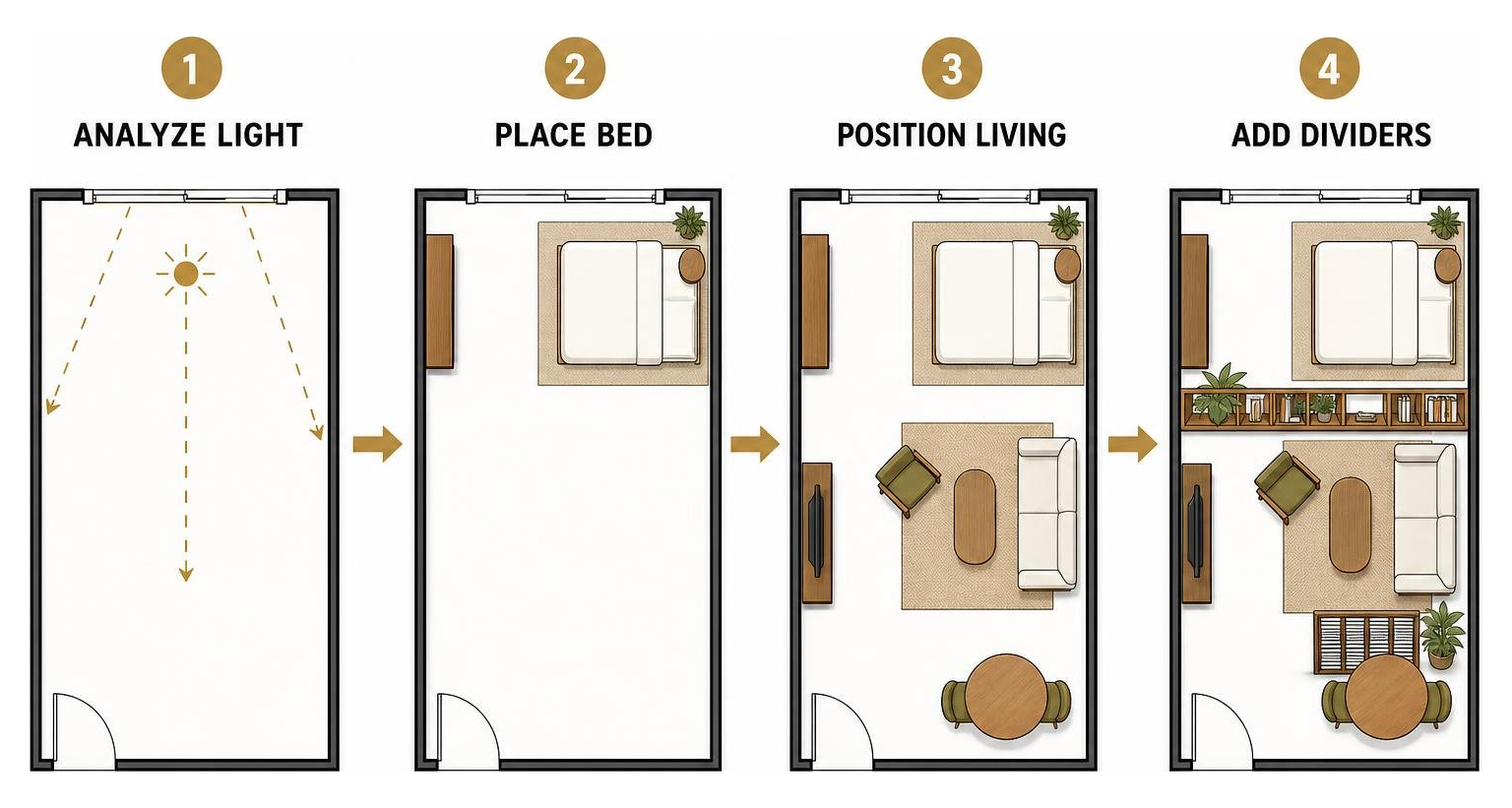
The greatest challenge of living in a mid century studio apartment is preventing the space from feeling like one giant bedroom. To combat this, we must use smart zoning strategies that establish clear boundaries between your sleeping, living, and dining areas without blocking natural light.
As demonstrated in the elegant layout featured in This 500-Square-Foot NYC Studio Melds Minimalist and Midcentury Influences | Architectural Digest , maintaining a continuous visual flow is essential. Rather than using solid walls or heavy room dividers, we can use open-back shelving units. A classic mid-century modular wall unit or a warm teak bookshelf serves as an excellent divider. It provides storage for books and art while allowing sunlight to filter through both sides of the room.
Creating Distinct Living and Sleeping Zones
To establish a cozy, private sleeping area, consider utilizing a curtained bed nook. Hanging a floor-to-ceiling linen curtain allows you to easily tuck your bed out of sight when hosting guests.
Additionally, we can use large area rugs to anchor different zones. A plush shag rug can define your living area, while a flat-weave geometric rug marks your dining nook. This physical and visual separation guides the eye through the apartment, creating the illusion of multiple distinct rooms. For a deeper dive into optimizing open-concept layouts, check out our resources on Studios in Chicago.
Maximizing Storage and Functionality
In a compact home, every single piece of furniture must pull double duty. Look for mid-century coffee tables with hidden storage compartments, or opt for a vintage credenza that serves as both a media console and a dresser.
If your apartment features built-in closets, make full use of their vertical space with modular shelving to keep your living area free of clutter. Utilizing vertical space—such as mounting floating wooden shelves above doorways or in unused corners—keeps your floor clear and preserves the clean, airy aesthetic of the mid-century style. Discover more ways to streamline your layout by browsing our tips on Chicago Studio Rental.
Material and Color Palettes for Mid-Century Interiors
The materials and colors you select will set the entire tone of your mid century studio apartment. To ground the space, start with a foundation of warm, organic woods. Teak, walnut, and rosewood are the hallmarks of this design era, each offering a distinct grain pattern and rich tone.
| Wood Type | Characteristics | Recommended Accent Colors |
|---|---|---|
| Teak | Golden-brown, highly durable, fine grain | Deep teal, mustard yellow, charcoal |
| Walnut | Rich, dark brown, complex swirl patterns | Burnt orange, cream, sage green |
| Rosewood | Deep reddish-brown, dramatic dark streaks | Mustard yellow, soft white, olive green |
By pairing these rich wood tones with a balanced color palette, you can create a space that feels both historic and fresh, similar to the inviting home shown in Midcentury Design and Colorful Decor in a Charming Studio Apartment - The Nordroom .
The 60-30-10 Color Rule in Small Spaces
To keep your color palette cohesive, we recommend using the classic 60-30-10 design rule:
- 60% Dominant Color: This should be a calm neutral, such as warm off-white, soft gray, or beige, used on your walls and largest furniture pieces to keep the studio feeling bright and open.
- 30% Secondary Color: This color supports the dominant tone. Use rich wood finishes, neutral upholstery, or natural textiles to bring warmth and texture to the space.
- 10% Accent Color: This is where you can have fun with classic mid-century hues. Add pops of burnt orange, mustard yellow, or deep olive green through throw pillows, small accent chairs, and artwork.
Using this structured approach ensures your colorful accents stand out without overwhelming your layout. For more ideas on balancing color in upscale spaces, explore our guide to Luxury Studio Apartments Chicago.
Incorporating Plants, Art, and Lighting
No mid-century space is complete without a touch of nature and art. Indoor plants like snake plants, fiddle-leaf figs, and monstera deliciosa are excellent choices; their architectural leaf shapes perfectly complement the clean lines of mid-century furniture.
When it comes to art, look for large-scale abstract paintings or geometric prints that reflect the optimism of the post-war era. Frame them in simple wood or thin black metal frames to keep the focus on the artwork itself. For more inspiration on accessorizing your home, check out Modern Studio Apartments Near Me.
Frequently Asked Questions About Mid-Century Studio Design
How do you balance vintage mid-century finds with modern necessities?
The key to blending vintage charm with modern technology is seamless integration. Avoid trying to hide your modern essentials entirely; instead, frame them with classic design. Position your television on a sleek wooden credenza, or mount it on the wall surrounded by a curated gallery of vintage art prints.
Choose modern appliances with clean, minimalist profiles that naturally align with the simple geometry of mid-century design. Mixing a few contemporary accents—like a modern metal floor lamp—with your vintage wood furniture creates a layered, lived-in look that feels collected over time rather than styled from a catalog.
What lighting solutions work best to enhance the mid-century modern vibe?
Lighting is crucial for setting the warm, inviting ambiance that mid-century design is famous for. Avoid relying solely on harsh overhead lighting. Instead, layer your light sources using a mix of floor lamps, table lamps, and wall sconces.
Look for fixtures with iconic shapes, such as globe pendants, brass arching floor lamps, or three-arm insect-style ceiling lights. Using warm-toned LED bulbs will highlight the natural grain of your wood furniture and make your entire studio feel cozy and welcoming in the evening.
How can I find authentic mid-century pieces for a studio?
Finding authentic vintage furniture requires a bit of patience and a keen eye. Estate sales, vintage markets, and online secondhand platforms are fantastic places to search for unique items.
When shopping, look past minor surface scratches on wood pieces; solid teak and walnut can often be easily restored with a bit of wood oil or light sanding. Focus on the structural integrity and the shape of the piece. If you find a chair with great lines but worn upholstery, you can always have it recovered in a modern fabric to give it a second life.
Conclusion
Designing a mid century studio apartment is all about celebrating simplicity, warmth, and smart functionality. By selecting streamlined furniture, defining clear living zones, and incorporating rich wood tones and playful accents, you can easily transform a compact layout into a sophisticated, comfortable home.
If you are looking for the perfect canvas to build your dream mid-century home, explore our beautiful living spaces at The Winnie. Located in the heart of Uptown Chicago, IL, our modern studio and one-bedroom apartments seamlessly combine classic charm with upscale comfort. Ready to find your new space? Explore Floor Plans today and start designing your ideal home.