


Finding Chicago's Uptown: Where History Meets Modern Urban Living
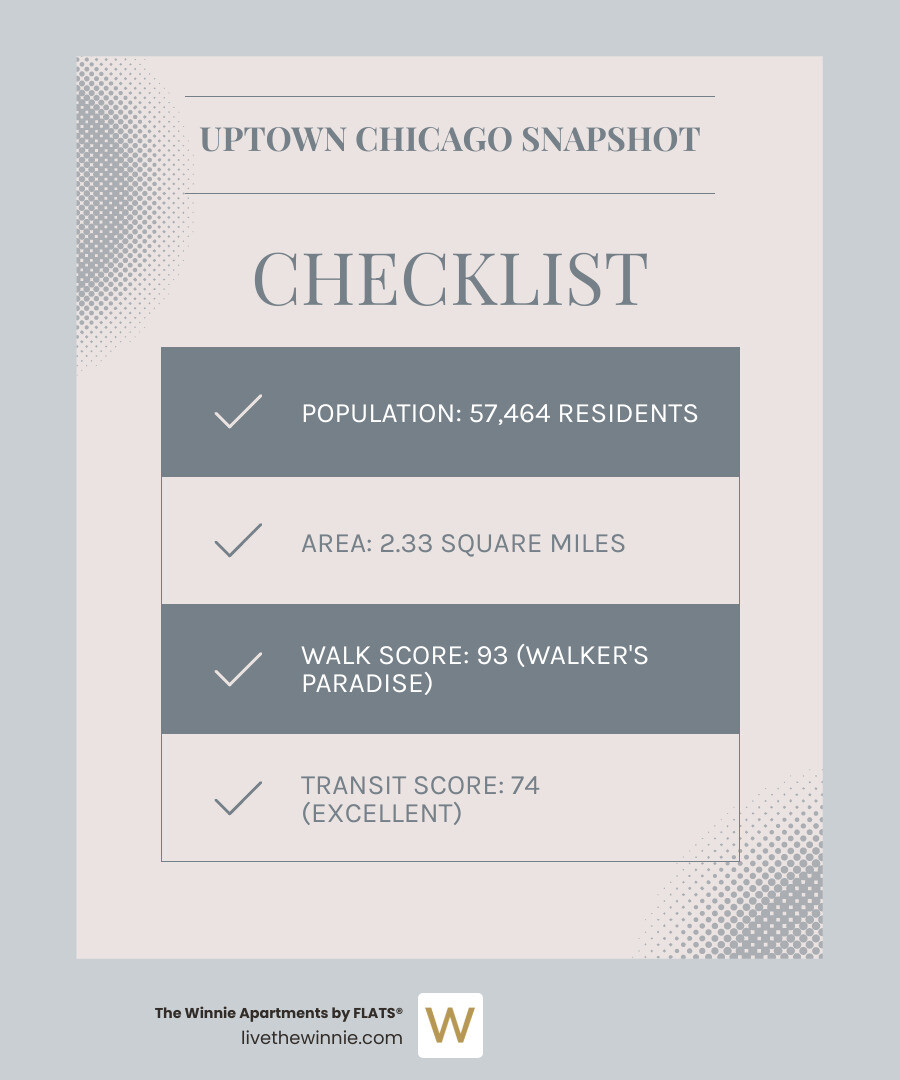
A chicago uptown neighborhood map reveals one of Chicago's most dynamic communities, spanning 2.33 square miles along Lake Michigan's shoreline. Here's what defines this vibrant North Side neighborhood:
Official Boundaries:
- North: Foster Avenue
- East: Lake Michigan
- South: Montrose Avenue and Irving Park Road
- West: Ravenswood Avenue and Clark Street
Key Facts:
- Population: 57,464 residents (2022)
- ZIP Codes: 60613 and 60640
- Density: Approximately 25,000 people per square mile
- Transit Score: 74 (Excellent Transit)
- Walk Score: 93 (Walker's Paradise)
Uptown is more than just coordinates on a map. Once Chicagoland's largest commercial and entertainment center outside the Loop, this neighborhood has evolved into a "city within a city." It's home to distinct districts, each with its own character—from the Asian shops along Argyle Street to the historic mansions of Buena Park and the legendary music venues of Uptown Square.
Today, residents are drawn to Uptown for its unbeatable combination: lakefront access at Montrose Beach, world-class entertainment at venues like the Aragon Ballroom and Green Mill Jazz Club, and a cultural diversity that brings global cuisine to your doorstep. Three CTA Red Line stations make downtown accessible in minutes, while tree-lined residential streets offer a classic neighborhood feel.
Mapping the Territory: The Official Chicago Uptown Neighborhood Map
Understanding the chicago uptown neighborhood map starts with knowing exactly where this vibrant community sits within Chicago's 77 official community areas. Each of these neighborhoods has its own personality and clearly defined borders, and Uptown's boundaries tell an interesting geographic story.
Looking at the official map, Foster Avenue marks the northern edge of Uptown, while the sparkling waters of Lake Michigan form a natural eastern border. To the south, you'll find Montrose Avenue and Irving Park Road creating the boundary line. Head west and you'll encounter Ravenswood Avenue and Clark Street completing the neighborhood's outline.
These boundaries contain 2.33 square miles of diverse urban landscape. Within this area, approximately 57,464 residents call Uptown home, creating a population density of around 25,000 people per square mile. That density brings energy and life to the streets—you're never far from a neighbor, a conversation, or something happening in the community.
When you're navigating addresses or searching for locations in Uptown, you'll mainly work with two ZIP codes: 60613 and 60640. These numbers are more than just postal identifiers—they're part of how the neighborhood organizes itself. For a deeper dive into how these ZIP codes break down across the area, check out our guide to the Uptown Zip Code.
Want to see all of this laid out in official detail? The City of Chicago provides an authoritative "Map of Uptown" (PDF) that shows exactly how Uptown fits into the broader city landscape. It's a helpful resource whether you're planning a move, exploring the neighborhood, or just curious about Chicago's geography.
A Storied Past: From Roaring Twenties Resort to Cultural Crossroads
Today's chicago uptown neighborhood map shows a busy urban community, but in the early 1900s, it was a fashionable summer resort town for Chicagoans escaping the city.
As Chicago grew, Uptown grew with it. By the Roaring Twenties, our neighborhood had become Chicagoland's largest commercial and entertainment center outside the Loop. Grand theaters, packed jazz clubs, and busy shops made it the place to be.
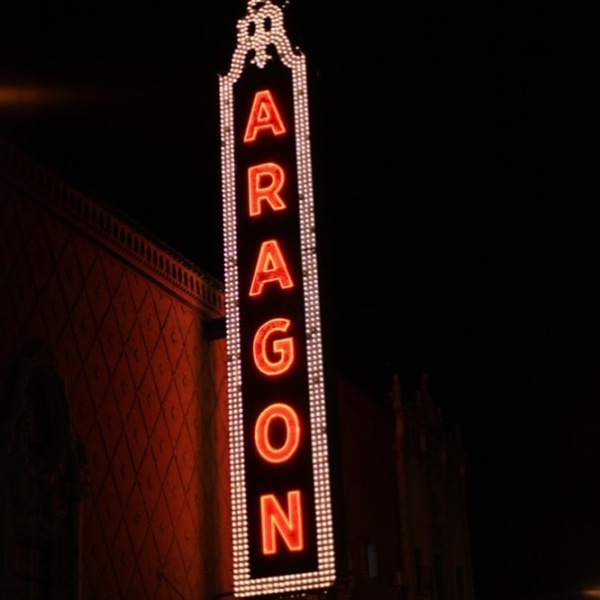
The Aragon Ballroom, the Riviera Theater, and the magnificent Uptown Theatre became household names. These large venues still attract over 240,000 people annually, a testament to their staying power.
Uptown even had a Hollywood moment. Essanay Studios set up shop on Argyle Street during the early days of cinema. Stars like Charlie Chaplin and Gloria Swanson walked these very streets, filming scenes that would flicker across movie screens nationwide.
After World War II, Uptown welcomed new arrivals. Migrants from the American South and Appalachia arrived in the 1950s and 60s, building communities and shaping the neighborhood's character.
Later, Uptown became a new home for Asian and Hispanic communities, adding to its cultural richness. It also emerged as a central hub for Chicago's Native American community, a legacy that continues today.
This continuous evolution—from resort town to entertainment capital to cultural crossroads—created the diverse, welcoming neighborhood you'll find on today's chicago uptown neighborhood map. Each wave of new residents added another layer to Uptown's story, creating a community that celebrates its past while embracing its future. For a deeper dive into this fascinating history, check out "Uptown" in the Encyclopedia of Chicago.
A Mosaic of Communities: Exploring Uptown's Distinct Districts
The chicago uptown neighborhood map is really a collection of several neighborhoods woven into one vibrant community. Living up to its reputation as a "city within a city," each district has its own personality. While boundaries can be fluid, the main districts are Buena Park, Sheridan Park, Asia on Argyle, and Uptown Square. Whether you're drawn to architecture, dining, or music, there's a corner of Uptown that feels like home. To find more about what makes our community special, visit Uptown Chicago Neighborhood.
Asia on Argyle: A Culinary and Cultural Hub
Walk off the Red Line at Argyle station, and you'll immediately know you've arrived somewhere special. The air carries the aroma of lemongrass and star anise. Colorful signs in Vietnamese, Cambodian, and Chinese beckon from storefronts. This is Asia on Argyle, sometimes called "Little Saigon" or "Little Vietnam."
The area's history includes an early Jewish community, but the 1970s brought profound change with the arrival of new residents from Vietnam, Cambodia, and China, including many entrepreneurs. They built a remarkable commercial hub, opening authentic restaurants, bakeries, and grocery stores that brought the flavors of Southeast Asia to Chicago.
Today, this district pulses with life. The annual Argyle Night Market draws more than 40,000 people to celebrate the neighborhood's rich cultural heritage. As you explore, look for the stunning "Roots of Argyle" mural, a powerful public art installation that captures 100 years of immigration history. You can learn more about this beautiful piece here: "Roots of Argyle Mural".
The pagoda-style Argyle 'L' station is a landmark honoring the community it serves. Whether you're craving pho or shopping for fresh produce, Asia on Argyle delivers an authentic cultural experience that is distinctly Chicago.
Buena Park & Margate Park: Lakeside Living and Historic Charm
Just a few blocks east, the character of Uptown shifts dramatically. Here in Buena Park and Margate Park, tree-lined streets lead past magnificent homes that speak to a different era of Chicago's history.
Buena Park earned national recognition as a historic district. Prairie-style mansions designed by architectural masters stand alongside beautifully maintained apartment buildings. The Hutchinson Street Historic District showcases some of the finest examples of this architectural heritage, including the striking Aquitania building.
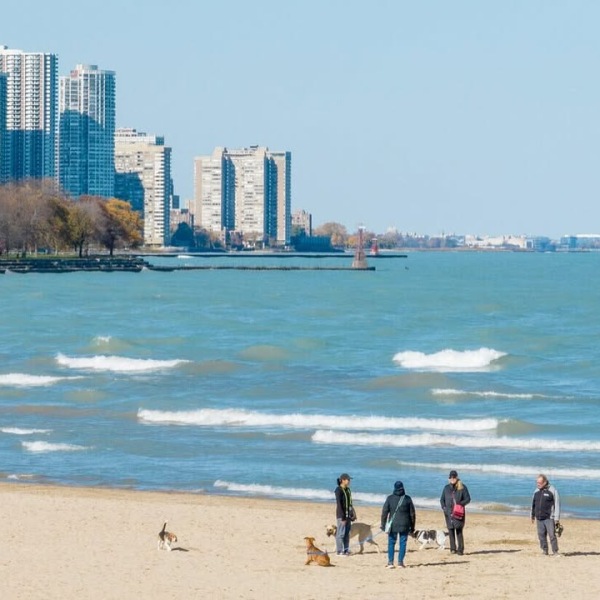
Perhaps the greatest treasure of these districts is their access to nature. Montrose Beach and Montrose Harbor are at the neighborhood's doorstep, offering sandy shores, boat launches, and unforgettable skyline views. On summer weekends, the beach is full of activity, and the harbor welcomes sailors and fishing enthusiasts.
If lakefront living appeals to you, these districts offer the perfect blend of historic charm and natural beauty. You can explore options for Apartments Near Lake Michigan that put you steps from both cultural amenities and outdoor recreation. The community feel here is quieter, with neighbors who take pride in the area's historic character.
Sheridan Park & Uptown Square: The Entertainment Epicenter
At the intersection of Broadway and Lawrence, you'll find the beating heart of Uptown's entertainment legacy: Uptown Square. This is where Uptown earned its reputation as Chicagoland's premier entertainment destination outside the Loop.
The Green Mill Jazz Club alone is worth the trip. Since 1907, this legendary venue has hosted everyone from Al Capone to modern jazz masters. The music still flows every night, and the atmosphere transports you to another era. Down the street, the Aragon Ballroom and Riviera Theater continue to book major national and international acts, contributing to the more than 240,000 people who attend shows at Uptown's entertainment venues each year.
These are living, breathing venues where music history happens every night. The variety and quality of entertainment within walking distance is simply best in most Chicago neighborhoods.
Adjacent to this vibrant entertainment core, Sheridan Park offers a more residential atmosphere. Established as a historic district in 1985, Sheridan Park protects its architectural treasures, particularly along Dover Street, which earned city landmark status for its collection of beautiful homes. The district's well-preserved buildings create a sense of stability and community pride.
The presence of Harry S Truman College adds another dimension to Sheridan Park, bringing educational opportunities and a diverse student population that enriches the neighborhood's character. This district offers the perfect balance of excitement and everyday neighborhood life.
Life in Uptown: Recreation, Transit, and Community
Living in Uptown means experiencing the best of both worlds—the energy of city life paired with the calm of lakeside living. Our neighborhood pulses with activity while offering quiet corners to recharge. Whether you're planning your morning jog, mapping your commute, or exploring local schools, Uptown has the infrastructure and community spirit to support the life you want to build. Find what makes our community special at Neighborhood.
Parks and Recreation: Your Guide to Uptown's Green Spaces
A glance at a chicago uptown neighborhood map reveals one of its best features: incredible access to Lake Michigan. This isn't just a line on a map—it's a lifestyle.
Montrose Beach is where summer comes alive. This wide stretch of sand is perfect for swimming, volleyball, or relaxing. Dog owners love the dedicated off-leash area where their companions can run free. Just north of the main beach, the Montrose Point Bird Sanctuary offers something quieter. Over 340 bird species have been recorded here, making it a favorite spot for birdwatchers and nature lovers. These protected natural areas provide essential habitat right in our urban landscape—learn more at "Natural Areas | Chicago Park District".
But our green spaces extend well beyond the lakefront. Clarendon Park Community Center serves as a true community hub, hosting the Garfield-Clarendon Model Railroad Club and Kuumba Lynx, an organization empowering youth through urban art. Chase Park and Margate Park Fieldhouse offer additional recreational facilities, while Wilson Skate Park gives skateboarders a dedicated space to practice.
These parks aren't just amenities—they're gathering places where neighbors become friends and communities grow stronger.
Getting Around: The Role of the CTA Red Line and a Detailed Chicago Uptown Neighborhood Map
Transportation in Uptown isn't an afterthought—it's one of our defining features. The CTA Red Line runs like a lifeline through our neighborhood, with three stations serving different parts of Uptown: Argyle, Lawrence, and Wilson. These stations connect you to downtown in minutes and extend north to Evanston, making virtually every corner of Chicago accessible.
Our transit credentials speak for themselves. With a Walk Score of 93, we're officially a "Walker's Paradise"—most errands can be accomplished on foot. Our Bike Score of 93 earns us "Biker's Paradise" status, while a Transit Score of 74 confirms we have "Excellent Transit." These aren't just numbers; they represent the convenience of being able to walk to your favorite restaurant, bike along the lakefront, or easily access public transit.
Multiple CTA bus routes crisscross our streets, connecting Uptown to neighboring communities. For those times when driving makes sense, DuSable Lake Shore Drive provides quick access to downtown and beyond. When you study any chicago uptown neighborhood map, you'll see how our location and transit options create endless possibilities.
Education and Institutions: Schools and Libraries in the Area
Uptown takes education seriously, offering resources for learners at every stage of life.
Harry S Truman College brings higher education right to our doorstep. As part of the City Colleges of Chicago, Truman serves over 23,000 faculty and students, providing a variety of pathways to degrees and career training.
Our public school system includes several elementary schools with attendance zones in Uptown: Brennemann Elementary, Courtenay Elementary Language Arts Center, McPherson Elementary, Goudy Technology Academy, and McCutcheon Elementary. High school students typically attend Senn High School or Amundsen High School.
Beyond classrooms, learning continues at the Bezazian Branch Library and Uptown Branch Library. These Chicago Public Library branches serve as community anchors. The Haitian American Museum of Chicago adds another dimension to our educational landscape, celebrating Haitian art, culture, and history.
The Vibe Today: Culture, Development, and Notable Names
Modern Uptown pulses with energy—a neighborhood that honors its storied past while embracing an exciting future. Walk our streets today and you'll experience a living mix of cultures, catch world-class performances, and witness a community actively shaping its destiny. This unique blend of heritage and innovation makes consulting a chicago uptown neighborhood map just the beginning of your Uptown story. For inspiration on experiencing our neighborhood, visit Things to Do in Uptown.
Arts, Dining, and Nightlife: A Modern Look at an Entertainment Mecca
Uptown's reputation as an entertainment mecca is a present reality. The Aragon Ballroom and Riviera Theater continue drawing major touring acts, welcoming over 240,000 attendees annually and making Uptown a premier destination for live music.
The legendary Green Mill Jazz Club remains a jewel in our crown, hosting top-tier jazz musicians in an intimate setting. Its vintage lighting and exceptional acoustics transport you to another era. And there's more excitement on the horizon—the anticipated reopening of the Double Door in the old Wilson Avenue Theater promises to add another beloved venue to our roster.
When it comes to dining, Uptown is a passport to the world. Asia on Argyle serves up authentic Vietnamese pho and Thai curries, but our culinary adventures don't stop there. You'll find Ethiopian, Latin American, and classic American comfort food, often in family-owned restaurants.
As evening falls, Uptown transforms into a vibrant nightlife destination. Historic spots like the Green Mill offer cocktails with a side of Chicago history, while modern lounges and neighborhood pubs provide contemporary gathering spaces. Find more about our evening scene at Uptown Chicago Nightlife or explore the perfect spot among our many Bars in Uptown.
Current Trends and Notable Residents of the Chicago Uptown Neighborhood Map
Uptown is a neighborhood actively writing its next chapter. The modernization of the Wilson 'L' Station brought sleek, contemporary transit infrastructure, signaling renewed investment. Ongoing efforts to restore the magnificent Uptown Theatre show our commitment to preserving architectural treasures. New residential buildings are rising, adding to the evolving skyline and bringing fresh energy. This change reflects what some have called "The Upscaling of Uptown"—a dynamic period of growth. You can read more about this evolution in "The Upscaling of Uptown".
Our streets have been home to remarkable people. George R.R. Martin, creator of "A Song of Ice and Fire," once lived here, as did legendary poet Carl Sandburg and choreographer Bob Fosse. More recently, U.S. Congresswoman Ayanna Pressley and Boston Mayor Michelle Wu have connections to the community. Even Al Capone was a known regular at the Green Mill, adding a colorful chapter to our lore.
What truly shapes modern Uptown is the work of residents and community organizations. Uptown United leads initiatives that strengthen our neighborhood. Public art like the "Roots of Argyle" mural celebrates our shared history. The Winthrop Family Historical Garden stands as a living memorial, celebrating Black resilience and community. These efforts show a community engaged in shaping its future. A chicago uptown neighborhood map today shows more than streets—it shows a neighborhood where history meets progress.
Frequently Asked Questions about Uptown Chicago
We've been talking about all the wonderful things that make Uptown special, but we know you probably have some practical questions. Let's address some of the most common ones we hear.
What are the main sub-neighborhoods in Uptown?
When you look at a chicago uptown neighborhood map, you'll notice our community is a collection of distinct districts, each with its own personality.
Asia on Argyle is our culinary treasure, transporting you to Southeast Asia. Nearby, Buena Park offers a different experience with its tree-lined streets and stunning Prairie-style mansions. Sheridan Park brings its own historic charm with beautiful homes and a tight-knit community feel.
Then there's Uptown Square, the heart of our entertainment scene, where the Green Mill and Aragon Ballroom keep the legendary nightlife alive. Along the lakefront, Margate Park provides coveted access to Montrose Beach and breathtaking Lake Michigan views.
Each of these districts contributes to what makes Uptown such a dynamic place. You can walk from Vietnamese bakeries to historic jazz clubs to sandy beaches—all within the same neighborhood.
What is Uptown Chicago best known for?
Longtime Chicagoans will likely mention our historic entertainment venues first. The Aragon Ballroom, Riviera Theater, and Green Mill Jazz Club are living pieces of history that still host incredible performances, drawing music lovers from across the city and beyond.
But Uptown is equally celebrated for its diverse cultural communities. Our neighborhood has always welcomed newcomers, a tradition that continues today. The vibrant Asian community along Argyle Street, historic connections to immigrant groups, and ongoing cultural celebrations create a rich mix of experiences. This diversity shows up in our restaurants, festivals, and shops.
And let's not forget our incredible lakefront access. Montrose Beach and Montrose Harbor aren't just nice amenities—they're defining features of daily life here. Whether you're watching the sunrise over the lake or walking your dog on the beach, Lake Michigan is part of what makes living in Uptown so special.
Is Uptown Chicago well-connected by public transport?
This is one of the best things about living here—getting around is incredibly easy. The CTA Red Line runs right through our neighborhood with three stations: Argyle, Lawrence, and Wilson. These stations connect you to downtown Chicago in about 20 minutes, making your commute or weekend adventures a breeze.
Beyond the Red Line, numerous CTA bus routes crisscross Uptown. We're particularly proud of our neighborhood's Walk Score of 93 (a "Walker's Paradise"), Bike Score of 93 (a "Biker's Paradise"), and a Transit Score of 74 ("Excellent Transit"). In real life, this means you can easily run errands, meet friends, and get to work with great convenience.
Many residents enjoy a lifestyle that doesn't depend on a car, taking advantage of our fantastic transit connections and walkable streets. When you look at the chicago uptown neighborhood map with all its transit options, you'll see why Uptown is one of the most convenient places to live in Chicago.
Conclusion: Your Next Chapter in Uptown
As we've explored the chicago uptown neighborhood map together, one thing becomes beautifully clear: Uptown is a neighborhood that defies simple definition. This is a place where Jazz Age glamour meets modern urban energy, where century-old entertainment venues still pack crowds, and where you can start your morning with Vietnamese pho and end your evening with world-class live music—all within a few walkable blocks.
We've journeyed through Uptown's storied past, from its days as a lakeside resort town to its evolution as Chicagoland's entertainment capital. We've wandered through distinct districts like the culinary wonderland of Asia on Argyle, the historic elegance of Buena Park, and the vibrant heart of Uptown Square. We've finded abundant green spaces, exceptional transit connections, and a cultural diversity that makes every day feel like an adventure.
What makes Uptown truly special isn't just its location along Lake Michigan or its impressive Walk Score of 93. It's the way this neighborhood welcomes everyone—whether you're drawn by the legendary Green Mill, the sandy shores of Montrose Beach, or simply the chance to be part of a community that celebrates its past while embracing its future. Here, you're not just moving to an address on a chicago uptown neighborhood map. You're becoming part of a living, breathing story that's been unfolding for over a century.
If you're ready to write your own chapter in this remarkable neighborhood, The Winnie Apartments by FLATS® offers modern studio and one-bedroom apartments designed to help you live your best Uptown life. Our community combines contemporary comfort with exclusive amenities, placing you right in the heart of everything that makes Uptown extraordinary. From our doorstep, you'll have immediate access to the lakefront, entertainment venues, diverse dining, and a neighborhood that truly feels like home.
Ready to find what life in Uptown could look like for you? Discover more about the neighborhood and take the first step toward making Uptown your new address. We think you're going to love it here.