


What to Know Before Renting a Pet Friendly Apartment
Finding pet friendly apartments is one of the biggest challenges for renters who share their lives with a cat or dog. Most people searching for pet-friendly housing want to quickly know:
What makes an apartment truly pet-friendly?
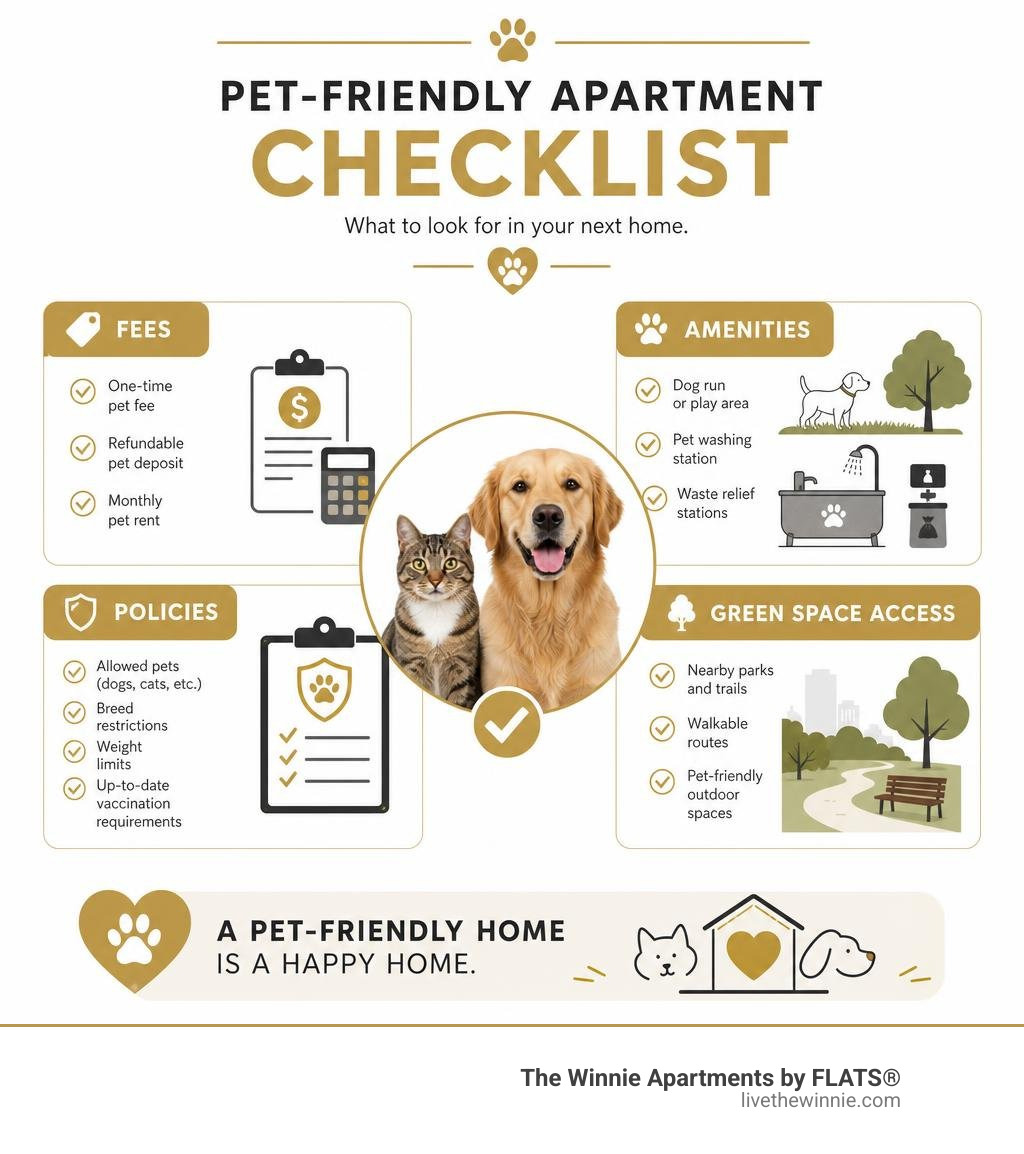
- Clear pet policies — written rules on allowed pets, breed restrictions, and weight limits
- Transparent fees — a breakdown of one-time pet fees, refundable deposits, and monthly pet rent
- On-site pet amenities — dog runs, pet washing stations, and waste relief areas
- Nearby green space — parks and walkable routes for daily exercise
- Responsible community — neighbors and management who genuinely welcome pets
Renting with a pet is not just harder — it is a completely different process than renting without one. You are not just finding a home for yourself. You are finding one that works for your animal too.
The numbers tell the story. Cities like Los Angeles have over 19,000 pet-friendly rentals listed at any given time. Miami has more than 3,000. Even smaller markets like Tucson list nearly 150 pet-friendly communities. There are options. But knowing how to evaluate them — beyond just the "Pets Allowed" tag — is what separates a great fit from a frustrating mistake.
This guide walks you through seven clear ways to tell if a pet-friendly apartment is actually right for you and your pet.
1. Evaluating the Financial Impact of Pet Friendly Apartments
When we begin our search for pet friendly apartments, it is easy to focus entirely on the floor plans and location. However, we must carefully evaluate the financial landscape of renting with a pet. Landlords and property managers typically charge extra to cover the potential wear and tear that animals can cause.
Understanding the distinction between different pet-related charges is essential for accurate financial planning. These charges generally fall into three categories: pet fees, pet deposits, and monthly pet rent.
- Pet Fee: This is a one-time, non-refundable charge paid at the start of the lease. It is essentially an admission fee for your pet to live in the building.
- Pet Deposit: This is a refundable sum of money paid upfront. If your pet causes no damage to the apartment during your tenancy, this money should be returned to you when you move out.
- Pet Rent: This is a recurring monthly charge added directly to your base rent. It is treated as an ongoing fee for housing your pet in the community.
To help visualize how these charges function, we have put together a quick comparison table:
| Charge Type | Frequency | Refundable? | Purpose |
|---|---|---|---|
| Pet Fee | One-time (Upfront) | No | Covers the administrative costs of admitting a pet to the building. |
| Pet Deposit | One-time (Upfront) | Yes | Held as collateral against physical damage to the unit. |
| Pet Rent | Monthly (Recurring) | No | Covers ongoing wear and tear of common areas and building maintenance. |
Before signing a lease, we highly recommend reading our modern pet-friendly apartments guide 2026 to understand how these structures protect both you and the property.
How to Plan Expenses for Pet Friendly Apartments
To avoid unexpected surprises, we must plan our expenses holistically. Upfront costs can add up quickly when you combine your standard security deposit with a pet fee and a pet deposit.
When calculating your monthly expenses, remember to factor the recurring pet rent into your baseline housing costs. This ensures your monthly commitment is fully transparent from day one. Additionally, we should always ask the leasing office if their pet rent is charged per pet or as a flat household fee. In most professional communities, these charges are assessed on a per-pet basis, with a maximum limit of two pets per household.
2. Navigating Breed Restrictions and Weight Limits
Even when an apartment building advertises itself as pet-friendly, there are often specific rules regarding the types of animals allowed. The most common hurdles we encounter are breed restrictions and weight limits.
Property management companies often establish these guidelines to comply with their master insurance policies. Common restricted dog breeds across the rental industry typically include Pit Bulls, Rottweilers, Chows, Dobermans, Huskies, Akitas, and American Staffordshire Terriers.

Weight limits are another crucial factor to consider. Some communities enforce strict weight caps on dogs. When reviewing these limits, keep in mind that properties typically calculate weight limits based on the animal's fully grown weight, rather than their weight at the time of move-in. If you are adopting a puppy, you will need to estimate their adult size to ensure they remain compliant with the building's policies.
Fortunately, cat owners generally face fewer hurdles. In the rental industry, it is widely understood that if a building accepts dogs, they will also accept cats. However, both cat and dog owners should verify if their personal renter's insurance policy covers pet liability, as some landlords require this as a condition of the lease.
3. Assessing On-Site Amenities and Neighborhood Green Spaces
A truly pet-friendly community goes beyond simply allowing animals inside the building; it provides an environment where pets can thrive. When we tour potential homes, we should look closely at both the on-site amenities and the surrounding neighborhood.
On-site pet amenities make daily pet care incredibly convenient. Some of the most valuable features to look for include:
- Dedicated Dog Runs: Safe, enclosed spaces within the property where your dog can stretch their legs.
- Pet Washing Stations: Fully equipped grooming areas that allow you to wash your pet without making a mess in your own bathroom.
- Waste-Enforcement Programs: Communities that use organized waste-management systems tend to keep their common areas much cleaner and more sanitary for everyone.
For a deeper look at what to look for in a modern community, check out our pet-friendly apartments chicago guide 2026.

Beyond the building's walls, neighborhood walkability and proximity to public parks are vital. Living near green spaces makes daily walks enjoyable rather than a chore.
Finding the Best Pet Friendly Apartments in Uptown Chicago
If you are looking to settle down in a vibrant, historic neighborhood, Uptown Chicago is an incredible place for pet owners. The area offers a beautiful mix of historic architecture, local entertainment, and fantastic outdoor spaces.
When searching for the perfect home here, we can use excellent online search tools to browse available listings. You can explore options on Uptown Chicago Pet Friendly Apartments - 621 Rentals , check real-time availability on Uptown Chicago Pet Friendly Apartments - 415 Rentals , or view local listings on Apartments For Rent in Uptown; Chicago, IL - 615 Rentals .
Living in Uptown means you are just minutes away from scenic lakefront paths and excellent neighborhood dog parks. To help you plan your daily routes, we have put together a guide to the best dog parks uptown chicago. For a complete overview of the local rental market, be sure to read our comprehensive pet-friendly apartments uptown chicago guide.
4. Preparing a Pet Resume and Proving Responsibility
If you find an apartment you love, but the landlord seems slightly hesitant about pets, you can stand out by proactively proving your responsibility. One of the best ways to do this is by creating a "pet resume."
A pet resume is a simple, professional document that introduces your pet to the landlord. It helps alleviate common concerns regarding cleanliness, noise, and behavior.
Your pet's resume should include:
- Up-to-Date Veterinary Records: Proof that your pet is spayed or neutered, fully vaccinated, and healthy.
- Obedience Training Certificates: Graduation certificates from recognized training programs to prove your dog knows basic commands and behaves well.
- Landlord References: Written letters from previous landlords confirming that your pet did not cause damage, bark excessively, or disrupt neighbors.
By presenting this information upfront, we show potential landlords that we are conscientious tenants who take pet ownership seriously.
5. Understanding Legal Rights for Service and Support Animals
It is incredibly important for renters to understand the legal distinction between standard pets, service animals, and Emotional Support Animals (ESAs).
Under the federal Fair Housing Act, service dogs and ESAs are not legally classified as "pets." Instead, they are recognized as assistance animals that perform tasks or provide therapeutic support for individuals with disabilities.
Because of this legal status, standard pet rules, breed restrictions, weight limits, and pet fees do not apply to them. Landlords cannot charge pet rent or one-time pet fees for a documented assistance animal. However, tenants are still responsible for any physical damage the animal might cause to the unit.
To help clarify how this verification process works, we have outlined the standard steps below:
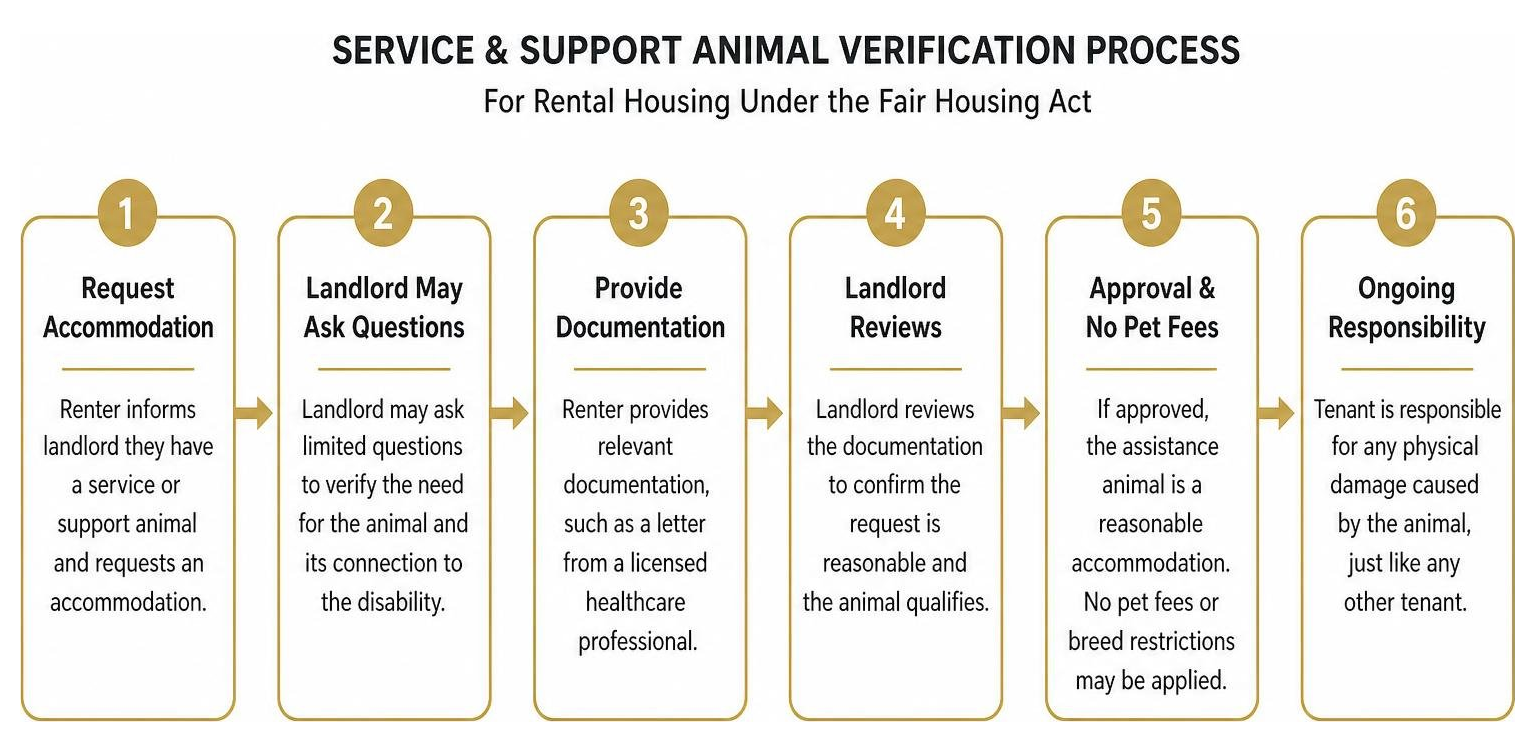
When applying for an apartment with an assistance animal, we should be prepared to provide official documentation, such as a letter from a licensed healthcare professional, to verify the need for the accommodation.
Frequently Asked Questions about Pet-Friendly Rentals
What should you look for when searching for pet-friendly apartments in Uptown Chicago?
When searching in Uptown Chicago, we should look for properties that explicitly outline their pet policies, including any specific breed or weight restrictions. It is also wise to check for on-site conveniences like indoor pet spas or dog runs, which make winters much easier to manage. For more tips on navigating the local market, check out our pet-friendly apartments chicago guide 2026.
How can you easily find pet-friendly apartments online?
The easiest way is to use specialized search engines and local directories that allow you to filter results specifically by "Cat Friendly" or "Dog Friendly" rather than just a generic "Pets Allowed" tag. Keeping an eye out for local neighborhood guides can also point you toward managed communities that welcome pets. You can find excellent local resources in our pet-friendly apartments uptown chicago guide.
What are the most important amenities for pet owners in an apartment community?
The most valuable amenities are those that save you time and keep your living space clean. On-site dog runs, dedicated pet washing stations, and close proximity to public parks are highly sought after. If you want to explore premium communities designed with these features in mind, take a look at our guide on uptown pet-friendly apartments.
Conclusion
Finding the right home for you and your pet does not have to be an overwhelming process. By evaluating the financial details, understanding pet policies, and looking for communities with dedicated pet amenities, you can find a space where both you and your pet feel completely at home.
At The Winnie Apartments by FLATS®, we offer modern studio and one-bedroom apartments in Uptown Chicago that perfectly combine luxury, comfort, and convenience. We understand that pets are family, and we design our communities to support a vibrant, pet-friendly lifestyle. From our thoughtful layouts to our incredible location near Uptown’s best parks and attractions, we provide everything you need for exceptional community living.
If you are ready to find your next home, explore our uptown pet-friendly apartments and schedule a tour with us today!